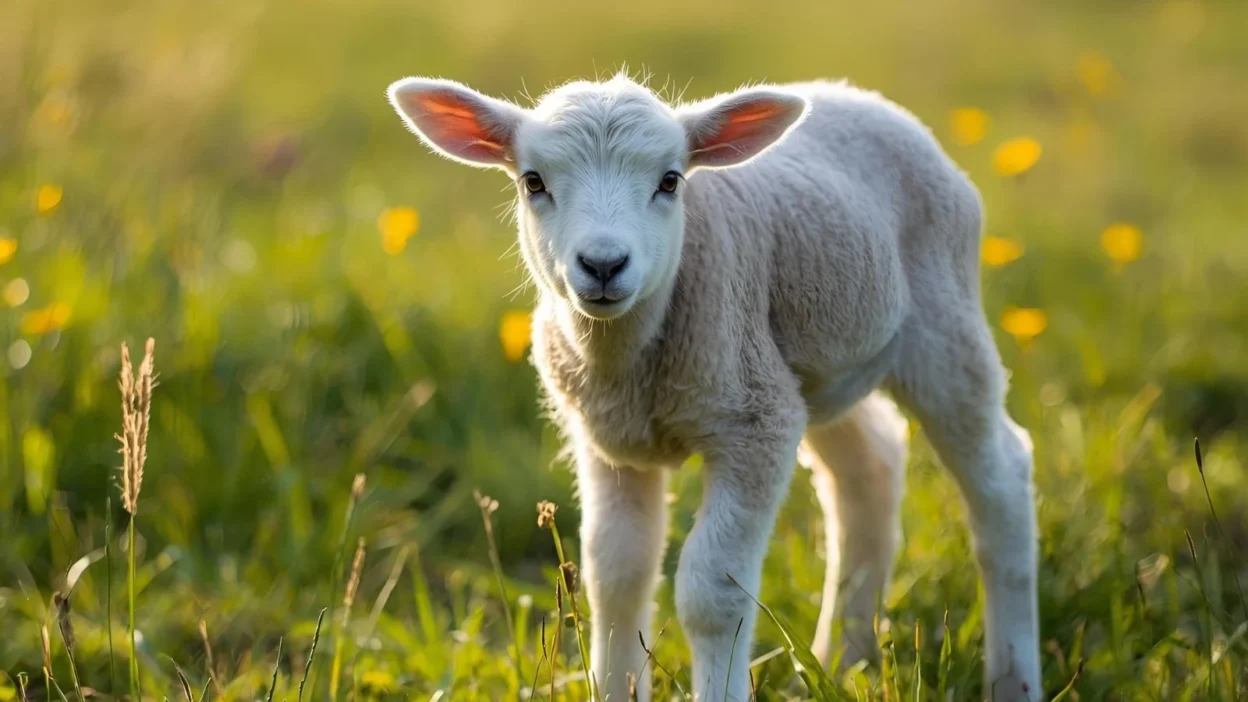
Lamb symbolism has been deeply rooted in human history for thousands of years, appearing in religious texts, ancient art, folklore, and spiritual traditions across the world. From firsthand cultural practices in pastoral societies to scholarly interpretations in theology, mythology, and psychology, the lamb has consistently represented purity, innocence, sacrifice, and renewal.
Experts in religious studies, symbolism, and anthropology often highlight the lamb as one of the most universally recognized symbolic animals, especially within Christianity, Judaism, and ancient Near Eastern cultures.
Through historical records, sacred scriptures, and lived traditions passed down through generations, the lamb’s symbolic meaning has evolved while retaining its core values of gentleness, humility, and moral goodness. Today, people search for lamb symbolism not only for religious understanding but also for personal insight whether interpreting dreams, spiritual signs, or symbolic messages in literature and art.
By drawing on credible historical sources, cross-cultural evidence, and well established symbolic interpretations, this guide explores the deeper meaning of lamb symbolism and why it continues to hold powerful significance in modern spiritual and cultural contexts.
Symbolism in Lamb to the Slaughter Summary
- On the surface, Lamb to the Slaughter tells of a devoted wife, Mary Maloney, who kills her husband with a frozen leg of lamb after he announces he’s leaving her.
- Beneath the dark humor lies rich symbolism: the lamb, representing innocence and sacrifice, becomes both a literal weapon and a spiritual turning point.
- Mary, once docile and loving, transforms into a symbol of repressed emotion and feminine power.
- The lamb itself—a biblical symbol of purity—turns into a tool of justice, turning weakness into strength.
- Spiritually, this reversal teaches us that pain often awakens dormant power.
- The story becomes a parable about betrayal, transformation, and karmic balance.
- What looks like sin in the physical sense can represent rebirth in the spiritual sense.
- Dahl’s use of dark humor is a reminder that light and shadow coexist in every soul.
- When you look deeper, every detail mirrors a universal truth: innocence, when betrayed, seeks divine restoration.
- The symbolism reminds us that every ending carries a hidden beginning.
Symbolism in Lamb to the Slaughter PDF
- Reading Lamb to the Slaughter in PDF form allows for deeper reflection and annotation of symbolic moments.
- Many readers note how Dahl weaves spiritual duality into the story through contrast—light vs. dark, love vs. betrayal.
- The text reveals that the “slaughter” isn’t only physical; it’s emotional and spiritual.
- The lamb in biblical literature often represents the sacrificial Christ figure.
- Here, it becomes inverted—a tool of retribution instead of redemption.
- Spiritually, this duality shows how grace and judgment are two sides of one divine truth.
- When read consciously, every symbol feels charged with karmic energy.
- The PDF version often includes teacher notes highlighting irony and imagery—both spiritually significant.
- It encourages introspection: what within us must be “slaughtered” to awaken truth?
- The digital version allows you to see how Dahl’s dark humor hides deeper spiritual insight.
Symbolism in Lamb to the Slaughter Meaning
- The spiritual meaning of the story revolves around transformation through emotional collapse.
- The lamb symbolizes innocence turned into wisdom through pain.
- Mary’s act, though violent, symbolizes the breaking of illusion—the moment innocence sees reality.
- The slaughter isn’t merely of a man—it’s of false peace.
- Spiritually, it echoes the phoenix principle—rebirth through destruction.
- The story challenges our ideas of good and evil by showing how both dwell in the same heart.
- The deeper symbolism teaches that every soul carries potential for both creation and destruction.
- When betrayal comes, it awakens parts of the spirit that were asleep.
- Mary’s stillness after the act represents detached awareness, a spiritual numbness before renewal.
- Thus, the meaning becomes a message of emotional evolution through awakening pain.
Symbolism in Lamb to the Slaughter Essay
- Writing an essay on this story reveals its layers of moral and spiritual complexity.
- The lamb symbolizes purity, yet it becomes an instrument of karmic balance.
- Dahl’s essay-worthy brilliance lies in transforming domesticity into divine irony.
- The story reflects how the divine feminine awakens when oppressed.
- Every essay on the story eventually circles back to transformation and justice.
- Mary represents both the victim and the redeemer archetype.
- In spiritual essays, she embodies the shadow work every soul must face.
- The act of “slaughter” becomes symbolic of releasing false identities.
- The essay format helps connect the story’s moral theme to human emotion.
- Spiritually, it’s less about revenge and more about the price of awakening.
Irony in Lamb to the Slaughter
- The story’s title itself is pure irony—a lamb that kills instead of being sacrificed.
- Irony teaches us that the universe often delivers lessons in unexpected ways.
- Mary’s innocence becomes the mask of divine justice.
- The police officers eating the evidence is both comic and karmic irony.
- Spiritually, irony reflects the unseen hand of balance in the universe.
- The meek become strong, and the guilty go blind—a divine reversal.
- Irony here isn’t just humor; it’s cosmic balance wrapped in satire.
- It reminds us that truth hides in plain sight.
- The laughter it provokes also cleanses—the way spiritual irony humbles the ego.
- In essence, irony in this story represents life’s unpredictable path to awakening.
Foreshadowing in Lamb to the Slaughter
- The calm before the storm foreshadows emotional eruption.
- Mary’s gentle rhythm of life hints at suppressed imbalance.
- Dahl foreshadows tragedy through her loving attention to domestic detail.
- The frozen leg of lamb in the freezer quietly waits as destiny’s tool.
- Spiritually, foreshadowing mirrors intuition—we always sense what’s coming.
- The story teaches us to listen to our own emotional “foreshadowing.”
- What looks ordinary often hides the seeds of transformation.
- The silence before betrayal is sacred—it holds truth waiting to unfold.
- Spiritually, every shock in life is preceded by subtle whispers from the soul.
- Dahl’s foreshadowing mirrors how divine timing always prepares us for awakening.
What Does the Leg of Lamb Symbolize in Lamb to the Slaughter
- The leg of lamb is the story’s central symbol—humble, domestic, yet powerful.
- Spiritually, it represents transformation of innocence into divine will.
- It’s a tool of both destruction and liberation.
- The lamb (a sacred symbol) becomes an instrument of justice—divine irony at its finest.
- It symbolizes hidden power within gentleness.
- Spiritually, it mirrors how love, when wounded, transforms into fierce protection.
- The frozen lamb shows emotional suppression; once used, it releases built-up energy.
- When the evidence is eaten, it symbolizes the unseen cleansing of karma.
- The lamb teaches that purity, when violated, can still serve higher truth.
- Thus, the leg of lamb symbolizes the weaponization of innocence into awareness.
Lamb to the Slaughter Symbolism Quotes
- “The room was warm and clean, the curtains drawn, the two table lamps alight.” – Symbolizes false comfort before awakening.
- “She loved to luxuriate in the presence of this man.” – Represents emotional dependency before betrayal.
- “It’s kind of funny—her husband’s right there in the house.” – Irony of truth hiding in plain sight.
- “The old story… the husband gone and the wife trying to get away with it.” – Reflects karmic cycles.
- “And in the other room, Mary Maloney began to giggle.” – Spiritual release through laughter and detachment.
- “She carried the meat into the kitchen.” – Symbol of transformation; turning pain into action.
- “The lamb to the slaughter” – Reversed meaning: the victim becomes the divine avenger.
- “The car door slammed, and the footsteps went up the path.” – Foreshadows emotional death.
- “They’re probably right under our noses.” – Metaphor for hidden truths and karmic justice.
- These quotes show how every line vibrates with spiritual irony and hidden emotion.
Imagery in Lamb to the Slaughter
- Dahl’s vivid imagery immerses readers in a world of deceptive peace.
- The warm living room becomes a symbol of false serenity.
- The frozen lamb in the freezer—imagery of emotional repression.
- The cozy domestic setting contrasts spiritual chaos inside Mary.
- The description of her calm after murder mirrors shock before awakening.
- The smell of cooking meat becomes symbolic of karmic completion.
- Imagery of light and darkness plays out like soul vs. ego.
- The softness of Mary’s voice contrasts with her inner eruption.
- Spiritual readers can see every visual as a metaphor for duality.
- The imagery reflects how beauty and darkness often share the same home.
Figurative Language in Lamb to the Slaughter
- Dahl uses metaphors and irony to reveal emotional truth.
- The lamb becomes a symbolic metaphor for innocence destroyed.
- The title itself is figurative—no lamb, yet full of slaughter.
- Hyperbole and repetition build emotional tension.
- Similes reveal Mary’s fragile emotional world.
- The tone shift mirrors spiritual awakening through chaos.
- Irony acts as divine symbolism, showing justice through humor.
- Figurative language here acts like scripture—simple yet layered.
- Spiritually, metaphors connect the seen and unseen worlds.
- Every phrase reminds us that language, like spirit, hides deeper truth beneath its surface.
Real-Life Scenarios: How the Symbolism Resonates Spiritually
Scenario 1: A woman betrayed by someone she trusted learns to set boundaries and rise stronger—not through revenge, but through awareness. Like Mary, her innocence becomes wisdom.
Scenario 2: A man faces sudden loss. At first, he feels numb, “frozen” like the leg of lamb. But slowly, he realizes it’s the start of his emotional awakening.
Scenario 3: A friend constantly gives too much love and ends up drained. Spiritually, the story teaches her to awaken her inner strength and stop sacrificing peace for others.
FAQs
1. What is the main symbolism in Lamb to the Slaughter?
The lamb symbolizes innocence, sacrifice, and divine justice—showing how purity can transform into power.
2. Why is the story titled “Lamb to the Slaughter”?
It’s an ironic reversal of the biblical phrase, where the “lamb” (Mary) becomes the agent of slaughter instead of the victim.
3. What spiritual lessons can we take from this story?
That betrayal can awaken the deepest transformation and self-awareness.
4. What does the leg of lamb represent spiritually?
It symbolizes repressed emotion released and innocence turning into inner strength.
5. Is Lamb to the Slaughter just about murder?
No. It’s about emotional awakening, irony, and karmic reversal—a dark fable about transformation through truth.
Conclusion:
The spiritual meaning of seeing a symbolism in Lamb to the Slaughter lies in its paradox—where gentleness meets power, and betrayal births awareness. Dahl didn’t just write a crime story; he wrote a mirror of the human soul, reminding us that even in darkness, transformation is possible.
Just as Mary Maloney’s world collapsed, ours too can break open—to reveal the light hiding beneath the chaos. Every heartbreak, every betrayal, every “slaughter” moment carries within it the seed of awakening.
So, the next time life freezes you like a leg of lamb—remember: you are not breaking down; you are breaking open.
Discover More Articles: