If you’ve seen the term “OPP” in rap lyrics, TikTok comments, or text messages and wondered what it really means, you’re not alone. Slang evolves fast, and OPP is one of those terms that carries multiple meanings depending on context, culture, and platform.
As a slang term rooted in urban street culture and hip hop, OPP has been widely used by artists, influencers, and everyday users online sometimes casually, sometimes seriously.
Drawing from verified linguistic sources, pop-culture usage, and real-world examples, this guide breaks down what OPP means in a clear, accurate, and easy to understand way. Whether you’re a student, content creator, parent, or just someone trying to keep up with modern internet language, understanding OPP helps you avoid confusion and misinterpretation.
Definitions & Meaning
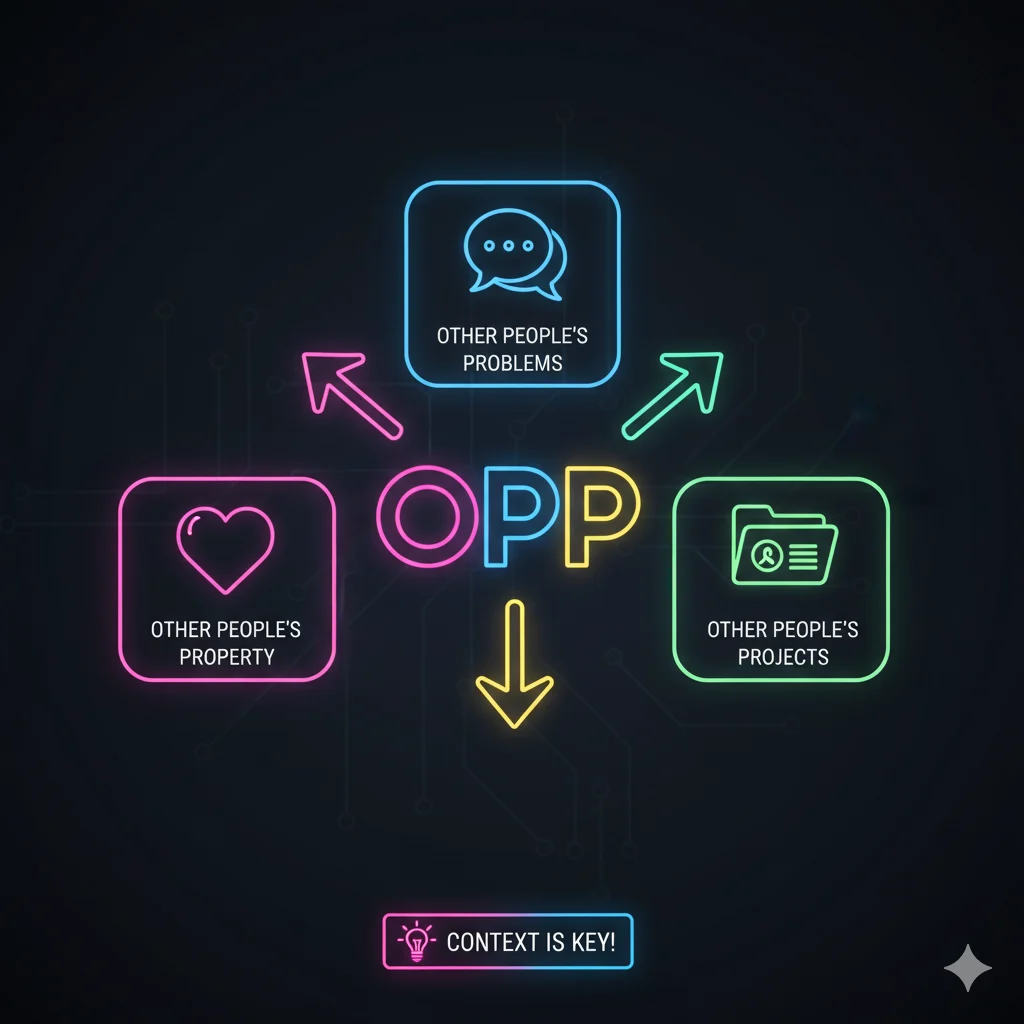
Let’s start simple: What does OPP mean?
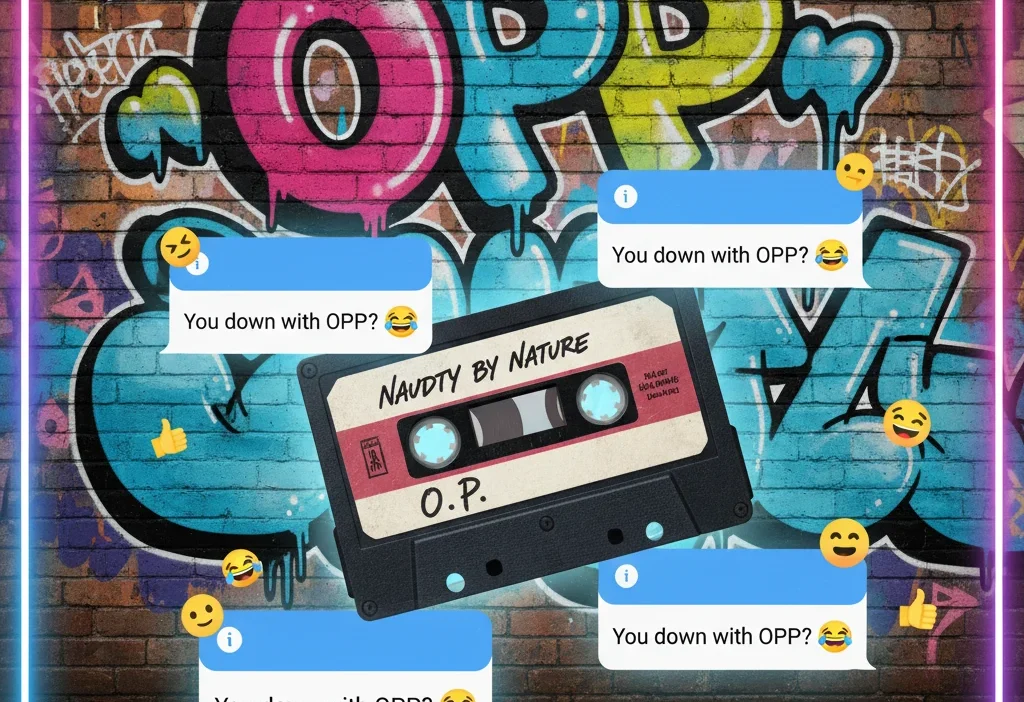
The most recognized full form is “Other People’s Property.” It became iconic after Naughty by Nature’s hit song “O.P.P.” in 1991. Here, “property” symbolized a person in a relationship — playful, controversial, and instantly memorable.
But slang evolves. Over time, OPP took on several meanings based on context:
- Other People’s Problems – Common in texting or social media to express disinterest in drama.
Example: “That’s OPP, not my issue.” - Other People’s Projects – Used in professional or tech settings when referencing someone else’s tasks.
Example: “I’m not touching OPP this week.” - Ontario Provincial Police (Canada) – In formal contexts, OPP is the official abbreviation for this law enforcement agency.
Each meaning highlights how one acronym can live in totally different worlds — from rap culture to work emails.
Naughty by Nature “O.P.P.” lyrics]
Origins & History
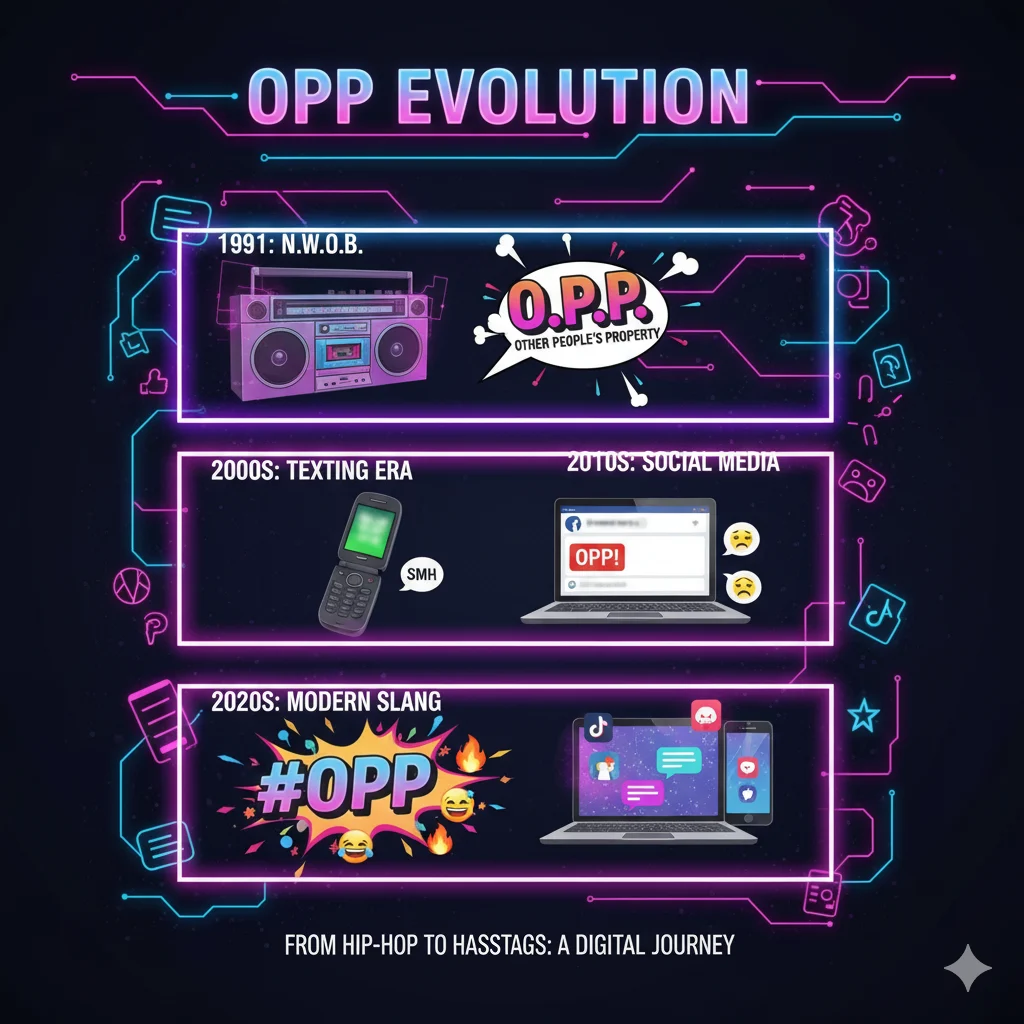
The origin of OPP begins with early 1990s rap culture. Naughty by Nature’s “O.P.P.” turned an underground phrase into a global slang sensation. The catchy chorus — “You down with O.P.P.? Yeah, you know me!” — became an anthem of the era.
While the song’s meaning (“Other People’s Property”) revolved around romantic boundaries, its energy symbolized confidence and rebellion — core traits of hip-hop expression.
Before the song, similar phrases floated around African American Vernacular English (AAVE), but the track pushed OPP into mainstream culture.
Over time, as the internet exploded, OPP evolved again. On Reddit, TikTok, and Twitter, it became shorthand for “Other People’s Problems.” Meanwhile, office workers began saying it when referring to “Other People’s Projects.”
This evolution shows how language adapts to new generations, technologies, and cultural trends — turning a 90s rap lyric into a universal shorthand for boundaries and ownership.
Usage in Different Contexts
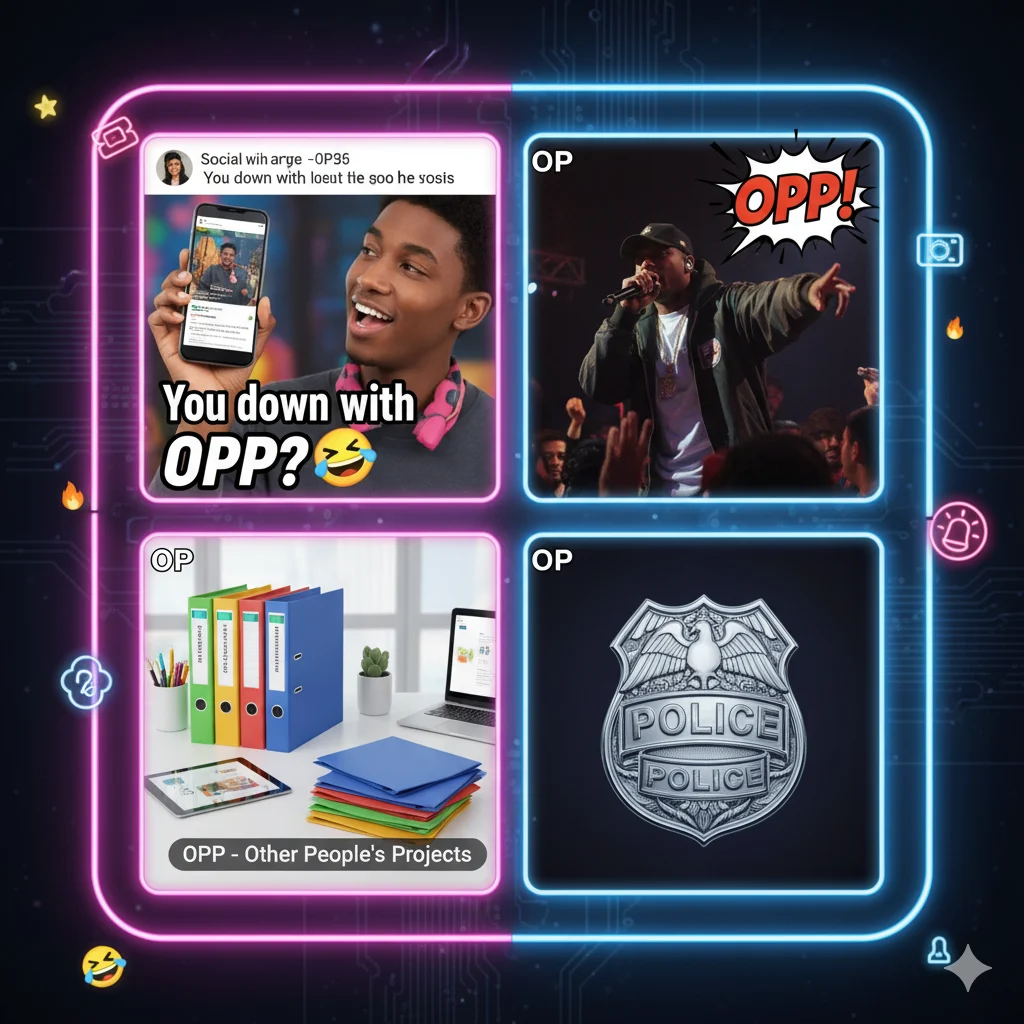
The beauty of slang lies in its flexibility — and OPP proves that perfectly.
1. Social Media & Texting
In modern conversations, “OPP” often means Other People’s Problems. It’s a way to say, “Not my drama.”
Example: “Don’t drag me into that — pure OPP!”
This phrase appears in memes, comment threads, and group chats, signaling emotional distance or humor.
2. Music & Pop Culture
In rap songs and hip-hop slang, OPP still stands for “Other People’s Property.” The Naughty by Nature classic inspired endless references in pop lyrics and memes. Even Gen-Z creators remix its iconic hook on TikTok, proving how timeless it is.
3. Professional Settings
In the workplace, OPP = Other People’s Projects. It’s used to establish boundaries and workload priorities.
Example: “I’m focused on my deliverables — can’t handle OPP right now.”
4. Law Enforcement
In Canada, OPP officially means Ontario Provincial Police, one of the largest law enforcement agencies. This shows how the same acronym can switch meanings completely by region.
Ontario Provincial Police Official Site
Common Misunderstandings & Clarifications
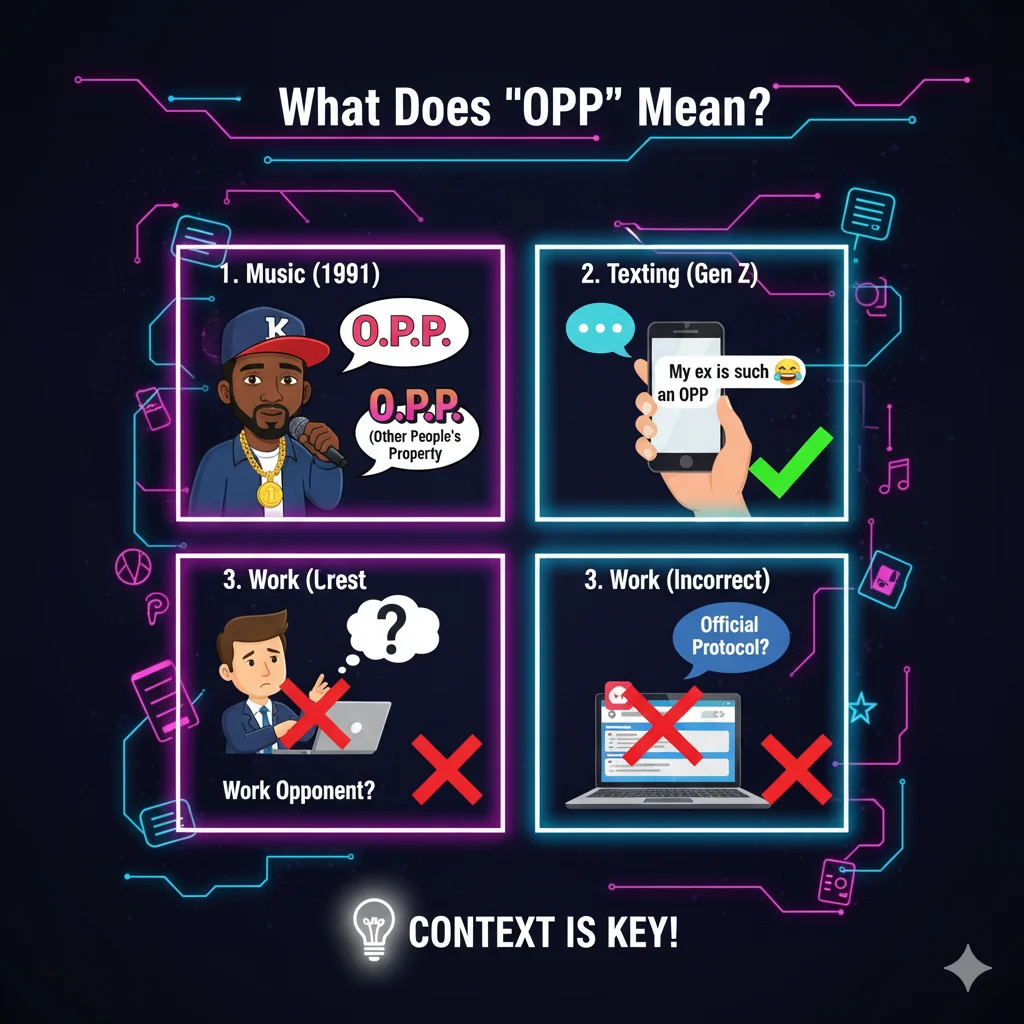
Because OPP wears many hats, it’s easy to misread. Here’s how to clear the confusion:
- Myth 1: OPP always means cheating.
❌ Not anymore. The term also stands for Other People’s Problems or Projects. - Myth 2: OPP is old slang.
❌ False! It’s still trending on TikTok, especially in nostalgic remix videos. - Myth 3: It means the same everywhere.
❌ Nope — context is king. A Canadian officer and a Twitter user definitely aren’t talking about the same thing!
Understanding context keeps you from misinterpreting slang and sounding out of touch.
Alternatives & Synonyms
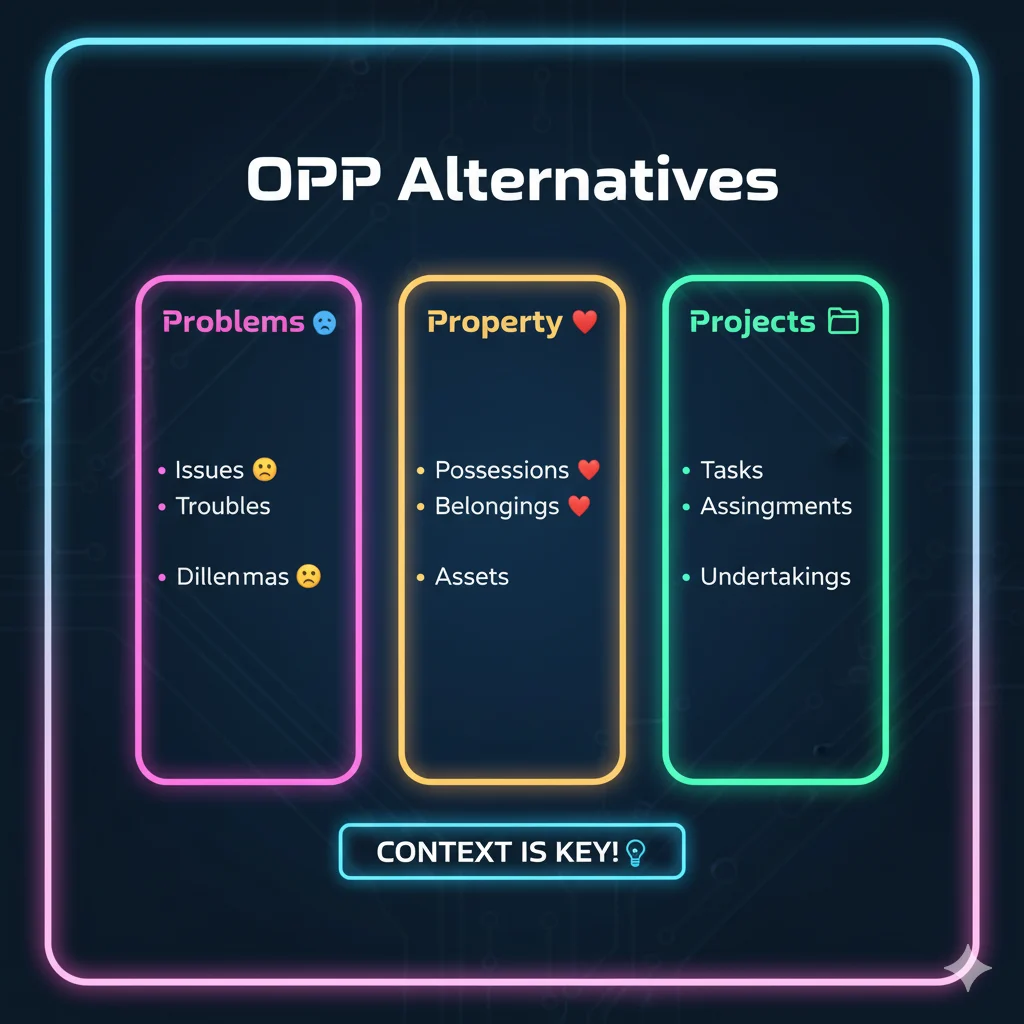
Depending on what you mean by OPP, here are great alternatives:
For Other People’s Problems:
- “Not my circus, not my monkeys.”
- “Their drama.”
- “Someone else’s issue.”
For Other People’s Property:
- “Off-limits.”
- “Taken.”
- “Unavailable.”
For Other People’s Projects:
- “External work.”
- “Third-party task.”
- “Non-core assignment.”
These phrases communicate boundaries clearly — whether you’re avoiding gossip or defining work priorities.
Frequently Asked Questions (FAQ)
1. What does OPP mean in texting?
Usually Other People’s Problems — meaning you’re not part of the drama.
2. What does OPP mean in rap?
In Naughty by Nature’s classic, it means Other People’s Property.
3. What does OPP mean in Canada?
It’s short for Ontario Provincial Police.
4. Is OPP still used today?
Yes! It’s alive in memes, TikTok remixes, and modern slang.
5. Is OPP inappropriate?
Not inherently, though the original song had mature themes.
6. Can I use OPP at work?
Yes — if you’re talking about Other People’s Projects!
7. How can I tell what someone means by OPP?
Look at the context — music, texting, or regional cues usually give it away.
Conclusion
So, what does OPP mean in 2025? It’s a living acronym that’s grown far beyond its musical roots. From Other People’s Property to Other People’s Problems and Projects, it represents boundaries, relationships, and even priorities.
This evolution shows how language never stands still — especially slang born from creativity and community. Whether you’re vibing to a 90s classic or dodging drama in your group chat, you now know exactly what OPP means and how to use it like a pro.
👉 Your turn: Which version of OPP did you already know? Drop your answer in the comments and let’s see which meaning wins!
Discover More Articles: