

In Italian, “prego” is a very common word that means “you’re welcome.”It can also mean “please” or “go ahead,” depending on the situation.
In Italian, “prego” is one of the most commonly used words, and its meaning changes depending on the context. At its core, prego is a polite expression used to mean “you’re welcome”, but it also functions as “please,” “go ahead,” or “after you.” This versatility makes it a key word for anyone learning Italian or traveling in Italy.
Because prego appears in everyday conversation from restaurants and shops to formal settings understanding its different uses is essential for sounding natural and respectful in Italian.
In this guide, we’ll explore the main meanings of prego, how to use it correctly, and examples of real-life situations where it fits perfectly.
What Does Prego Mean in Text? 🧠
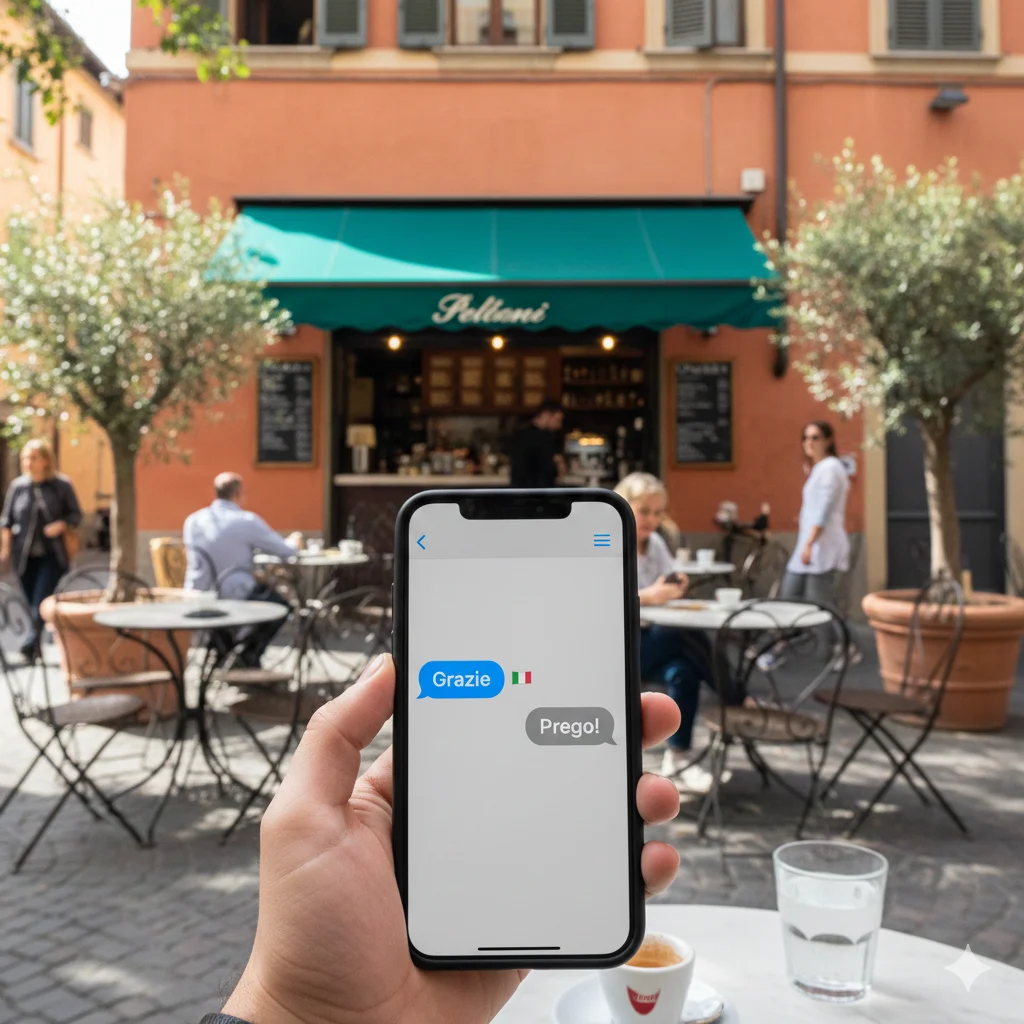
In Italian, prego is most commonly used to say “you’re welcome” after someone says “grazie” (thank you). It’s a polite and friendly expression that shows good manners.
However, the word is versatile:
- “You’re welcome” – after a thank-you
- “Please” – when inviting someone to do something
- “Go ahead” / “After you” – when letting someone pass or enter first
Example:
A: “Grazie per il caffè!”
B: “Prego!”
In short: Prego = You’re welcome / Please / Go ahead = Polite and versatile Italian expression.
Where Is Prego Commonly Used? 📱

You’ll find “prego” widely used in everyday Italian conversation:
- Texting & Messaging – responding to “grazie” in chats 🇮🇹
- Restaurants & Cafés – waiters saying “prego” after serving food 🍝
- Travel Conversations – polite responses to thanks in Italy ✈️
- Casual Speech – offering or inviting someone
- Social Media & Memes – playful or sarcastic uses of “prego”
Tone: Polite, friendly, and casual — suitable for daily interactions. Not formal in official documents, but universally accepted in conversation.
Examples of Prego in Conversation 💬
Here are realistic ways “prego” might appear in chats or casual conversations:
A: “Grazie per avermi aiutato con i compiti 🙏”
B: “Prego! Sempre felice di aiutare 😊”
A: “Posso sedermi qui?”
B: “Prego, accomodati!”
A: “Grazie per il consiglio sul ristorante”
B: “Prego! Spero ti piaccia 🍝”
A: “Mi passi il sale?”
B: “Prego!”
A: “Grazie mille per avermi accompagnato alla stazione”
B: “Prego, non c’è di che!”
A: “Vuoi entrare prima di me?”
B: “Prego, dopo di te 😊”
When to Use and When Not to Use Prego 🕓

✅ When to Use:
- Responding to grazie (thank you)
- Offering something politely
- Inviting someone to go first
- Friendly or casual Italian conversations
❌ When Not to Use:
- Formal business letters or legal documents
- Professional emails in English context (unless teaching Italian)
- Situations requiring very formal or ceremonial responses
Comparison Table:
| Context | Example Phrase | Why It Works |
|---|---|---|
| Friend Chat | “Prego! Sempre felice di aiutare 😊” | Casual, friendly |
| Restaurant | “Prego, ecco il tuo caffè ☕️” | Polite and culturally appropriate |
| Travel Chat | “Prego, accomodati!” | Informal and welcoming |
| Work Email | “Please find attached the report” | Formal and professional |
Similar Slang Words or Alternatives 🔄
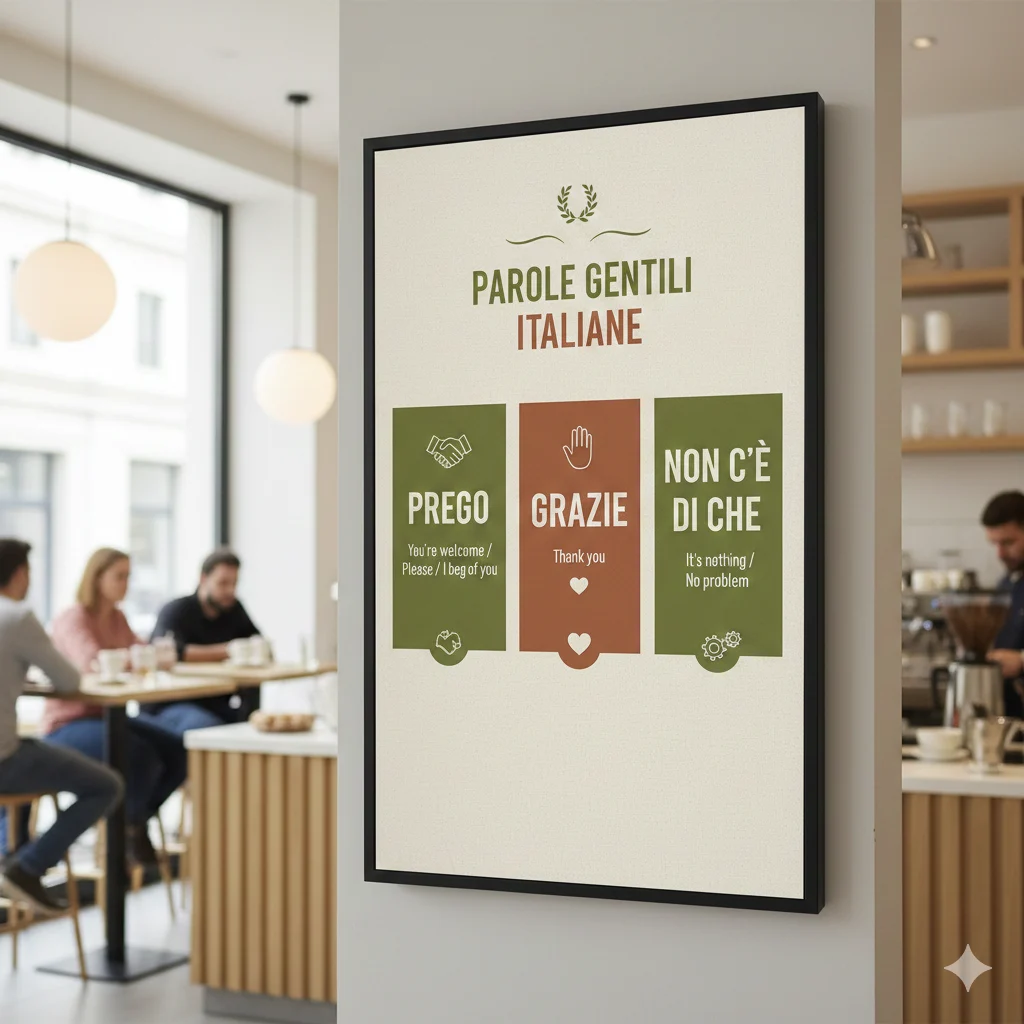
| Slang / Word | Meaning | When to Use |
|---|---|---|
| Grazie | Thank you | Standard Italian politeness |
| Non c’è di che | You’re welcome / No problem | Casual response to “grazie” |
| Si figuri | Don’t mention it / No worries | Polite, slightly formal |
| Vai avanti | Go ahead / After you | Letting someone go first |
| Per favore | Please | Asking politely |
FAQs About Prego ❓
- What does prego mean in Italian?
It primarily means “you’re welcome”, but can also mean “please” or “after you.” - How do you use prego in texting?
Respond to “grazie” or politely invite someone in casual Italian texts. - Is prego formal or casual?
Mostly casual, friendly, and polite. Not used in formal English documents. - Can prego mean “please”?
Yes, for inviting someone to do something: “Prego, entra” = “Please, come in.” - Where did the term come from?
From Latin precare, meaning “to pray” or “to ask,” now evolved in Italian as a polite expression. - Is prego used outside Italy?
Yes, in Italian communities worldwide and when learning Italian.
Conclusion
Prego is a simple yet versatile Italian word that conveys politeness, friendliness, and courtesy. Whether you’re replying to thanks, inviting someone, or letting someone go first, it’s an essential word in daily Italian conversation.
Next time an Italian friend thanks you, or you want to invite someone politely, a simple “prego” 🇮🇹 will do the trick!
Read More Articles About:
- Turtle Symbolism: What Turtles Represent in Spirituality, Culture, and Life 2026
- Charizarding Meaning: How the Term Is Used Today 2026